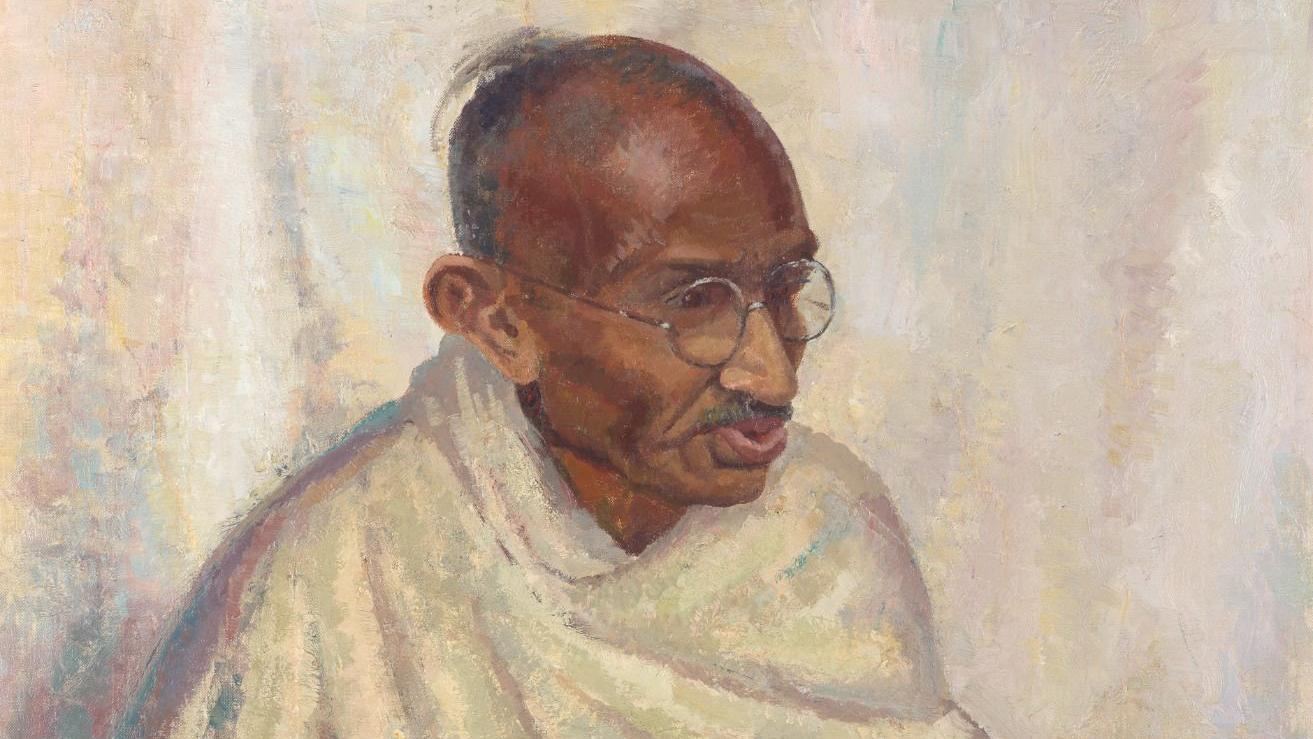
A seldom-seen oil painting of Mahatma Gandhi has garnered international attention after being sold at a recent auction for a figure exceeding $200,000. The artwork, notable both for its subject and its rarity, has become a focal point in the world of historical collectibles, highlighting the enduring fascination with Gandhi’s life, legacy, and visual representation.
The artwork, crafted by an unknown creator in the middle of the 20th century, depicts Gandhi in a thoughtful stance, highlighting his serene demeanor and the subdued energy he is known for. The exceptional aspect of this piece lies not only in its artistry but also in the rarity of oil portraits of Gandhi in the art world. Typically, images of the Indian independence figure are found in photographs, drawings, or prints, rendering original paintings highly desired by both collectors and institutions.
Based on statements from the auction house officials, the portrait surpassed its initial valuations significantly. Initial bids began with low expectations, yet interest grew rapidly when private collectors and global buyers acknowledged the piece’s cultural and historical importance. The final amount showcases both the subject’s symbolic worth and the rarity of similar pieces available.
This transaction sheds light on a broader trend in the global art market: the growing appreciation for artifacts associated with influential political and social leaders. In recent years, portraits and personal items linked to figures such as Nelson Mandela, Winston Churchill, and Martin Luther King Jr. have seen increased demand, not just as works of art but as tangible links to pivotal moments in history. Gandhi, whose philosophy of nonviolent resistance continues to inspire movements around the world, remains a particularly potent symbol.
Experts in art history indicate that the growing fascination with art centered on Gandhi aligns with worldwide demands for harmony, fairness, and moral guidance. As contemporary communities face political division, social upheaval, and self-reflection, individuals collecting art seem increasingly attracted to personalities that represent values of honesty and empathy. Gandhi’s portrayal, linked to modesty and resilience, strongly resonates with this storyline.
The purchaser’s identity has not been disclosed, although auction representatives mentioned that the artwork is anticipated to stay in private possession for now. There are reports implying that the new owner might be a global collector with a well-known passion for the history of South Asia, but this has yet to be verified. It is unclear whether the painting will eventually be accessible to the public via a loan to a museum or exhibition space.
Experts in the field of South Asian culture and art have described the auction as an important event for recognizing modern Indian history within Western art circles. Despite Gandhi’s worldwide recognition, sales of art pieces featuring him at high prices are still rare. Thus, this auction serves as a milestone in changing the market’s view not only of Gandhi’s legacy but also of the artistic depictions of that legacy.
Outside the realm of art, this sale has initiated conversations regarding the conservation and location of artifacts of great cultural importance. There are those who have expressed worries about vital historical objects residing in private collections, which may restrict public availability and academic study. These worries have sparked renewed debates over possession rights, cultural legacy, and the part that collectors play in preserving historical narratives.
Nevertheless, the record-setting price demonstrates the powerful resonance Gandhi still holds across borders and generations. His story, rooted in resistance to colonialism and advocacy for civil rights, continues to inspire new interpretations—through books, films, documentaries, and now, increasingly, through fine art. Each medium offers a different lens into his life, allowing for more nuanced conversations about his influence in the 21st century.
The visual details of the artwork are worth noting. In contrast to numerous formal portraits that highlight majesty or pomp, this unique piece portrays Gandhi with a subtle grace. The choice of colors is subdued, using natural shades that reflect Gandhi’s modest way of living and his ties to the countryside of India. The backdrop is minimalistic, putting the viewer’s attention entirely on the figure, which amplifies the emotional resonance of the piece.
Critics and curators alike have noted that the painting avoids dramatization. There are no overt symbols or decorative elements—just a powerful, quiet presence that evokes the principles Gandhi stood for. This artistic restraint may be part of what made the piece so appealing to buyers. In an age where imagery is often loud and attention-grabbing, the portrait’s subdued strength offers a rare kind of emotional depth.
Regarding the worth of investments, this transaction could indicate a change in the valuation of historical portraits within the larger art industry. Although modern and contemporary art frequently capture media attention, the increasing enthusiasm for works with political and social significance implies that collectors are also looking for items with storytelling and ethical significance. Depicting Gandhi with meticulous detail and reverence provides not just visual attraction but also an enduring link to concepts that go beyond eras and places.
The consequences of this transaction could extend into educational and curatorial realms. Organizations with South Asian collections might scrutinize the portrayal of Gandhi across various media and eras. It might also inspire current artists to reinterpret Gandhi in innovative manners, examining the crossroads between historical admiration and present-day artistic expression.
In the meantime, this particular painting will likely remain a talking point among collectors, historians, and admirers of Gandhi’s legacy. Its high-profile sale underscores the power of art not only as a visual medium but as a vessel for memory, identity, and shared cultural values.
As the art world continues to transform, both emotionally and financially, the triumph of this painting at auction underscores the importance of narratives. When these narratives are reflected in the image of someone as impactful as Mahatma Gandhi, their influence can endure for generations and clearly achieve six-figure sums.