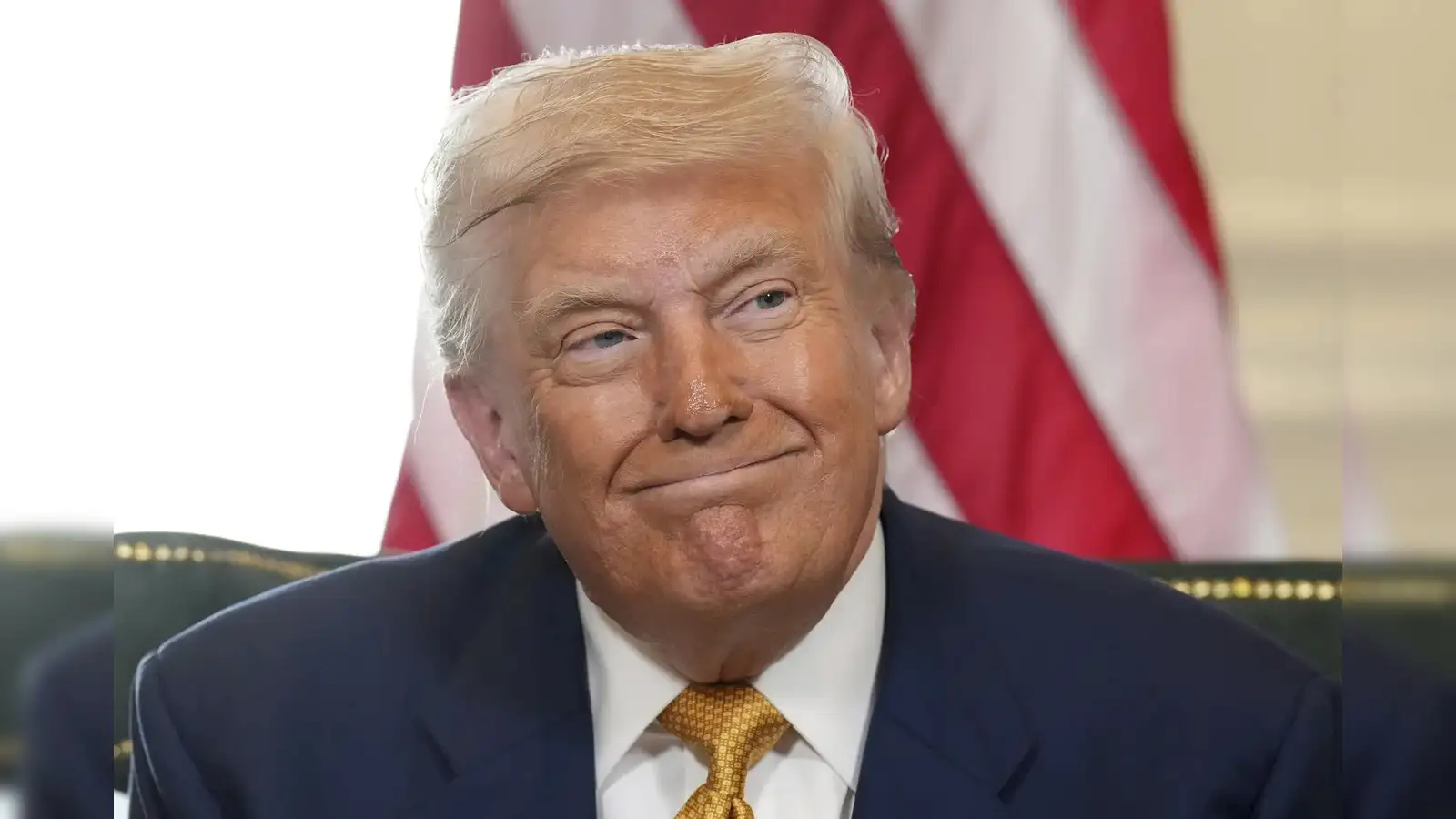
Former U.S. President Donald Trump has indicated that India, a country he has previously described as a “good friend,” may be subject to steep tariffs—potentially reaching 25%—if trade imbalances are not addressed. His remarks highlight the continuing focus on trade policy as a key pillar of his economic agenda, particularly in relation to countries with which the United States maintains complex economic relationships.
Trump’s comments come amid ongoing discussions about the future of global trade and the role of tariffs as leverage in negotiating better terms for American businesses. Although India and the U.S. have maintained relatively strong diplomatic and strategic ties in recent years, economic friction remains, especially regarding market access, duties on American goods, and technology regulations.
Throughout his presidency and beyond, Trump has frequently used tariffs as a tool to push for changes in trade practices that he views as unfavorable to the U.S. His stance toward India follows this familiar pattern, where even longstanding allies are not exempt from scrutiny or potential economic penalties if he believes American interests are not being adequately protected.
In his latest remarks, Trump again expressed gratitude for India’s leadership and its bond with the United States, emphasizing that alliance does not exempt from financial responsibility. He insisted that trade should be “balanced and mutual,” and any imbalance—especially if detrimental to American industries—will be addressed with tariffs or alternative methods.
The possible increase in tariffs by as much as 25% could mark a major intensification in trade disputes between the two nations. This decision might impact a broad spectrum of Indian exports to the United States, including textiles, medicines, machinery, and car parts. India, known as one of the globe’s rapidly expanding economies, has emerged as an essential trading ally for the U.S., with yearly two-way trade worth hundreds of billions of dollars.
Critics argue that increasing tariffs could disrupt not only the economic ties between the two nations but also the broader geopolitical partnership that has been strengthening over the past decade. India plays a crucial role in U.S. foreign policy, especially in the Indo-Pacific region, where it is seen as a counterweight to China’s growing influence.
Despite these concerns, Trump’s position reflects a broader strategy that prioritizes domestic economic gains over multilateral cooperation. His administration, and potentially a future one under his leadership, views trade deficits and imbalanced agreements as harmful to American manufacturing and labor. For Trump, tariffs are not just economic instruments—they are political tools that signal toughness on trade and responsiveness to voter concerns about jobs and industry decline.
During his term in office, the U.S. removed India from the Generalized System of Preferences (GSP), a program permitting some Indian products to enter the U.S. without tariffs. This action was defended by claiming that India had failed to give adequate access to its markets for American businesses. Consequently, India implemented retaliatory duties on American items, such as agricultural products.
Este intercambio creó el escenario para una relación comercial más tensa, a pesar de que ambas naciones continuaron fortaleciendo sus colaboraciones militares y estratégicas. Aunque ha habido intentos de ambas partes para resolver disputas comerciales mediante el diálogo, las tensiones subyacentes continúan.
If duties were elevated to the 25% threshold referenced by Trump, the consequences could be considerable for Indian exporters. Industries that are heavily dependent on the U.S. market might face decreased competitiveness, potentially resulting in job cuts and disturbances in the supply chain. Small and medium enterprises, which constitute a significant segment of India’s export economy, would be especially at risk.
For American consumers and businesses, the impact could also be felt through higher prices on imported goods and reduced availability of certain products. This would come at a time when inflationary pressures are already affecting the cost of living in the U.S., making any additional price hikes politically sensitive.
Nevertheless, those who favor Trump’s strategy claim that short-term discomfort is an inevitable price for achieving lasting change. They assert that stringent trade actions are crucial to rebalancing historically uneven relationships and encouraging trading partners to provide fairer access to their markets.
Indian officials have not issued an official response to Trump’s recent remarks, but past statements suggest that New Delhi remains committed to resolving trade issues through negotiation rather than confrontation. India has also taken steps in recent years to ease foreign investment rules, simplify regulations, and expand opportunities for international companies to operate within its borders—all in an effort to attract global partners and reduce friction.
The potential return of Trump to the presidency introduces an additional element of unpredictability to the international trade environment. Companies along the Atlantic and Indian Ocean are attentively observing political events, aware that shifts in leadership can swiftly modify the course of economic policy.
In the future, the United States and India will need to navigate the challenge of aligning national economic priorities with the long-term advantages of maintaining a collaborative relationship. Trade represents just one aspect of a complex partnership that also covers defense, technology, climate collaboration, and interpersonal connections.
Although Trump’s words indicate a possible change in tone, the fundamental pillars of U.S.-India ties continue to be robust. Regardless of whether tariffs are eventually enforced, the continued discussions between these countries will be pivotal in determining the economic landscape in the future.
In the meantime, industries, policymakers, and consumers will continue navigating a landscape where international trade remains subject to political calculations as much as economic logic. The suggestion of steep tariffs may be intended as a negotiating tactic, but it serves as a reminder that in today’s global economy, no relationship is immune to pressure—and no ally is beyond the reach of economic recalibration.