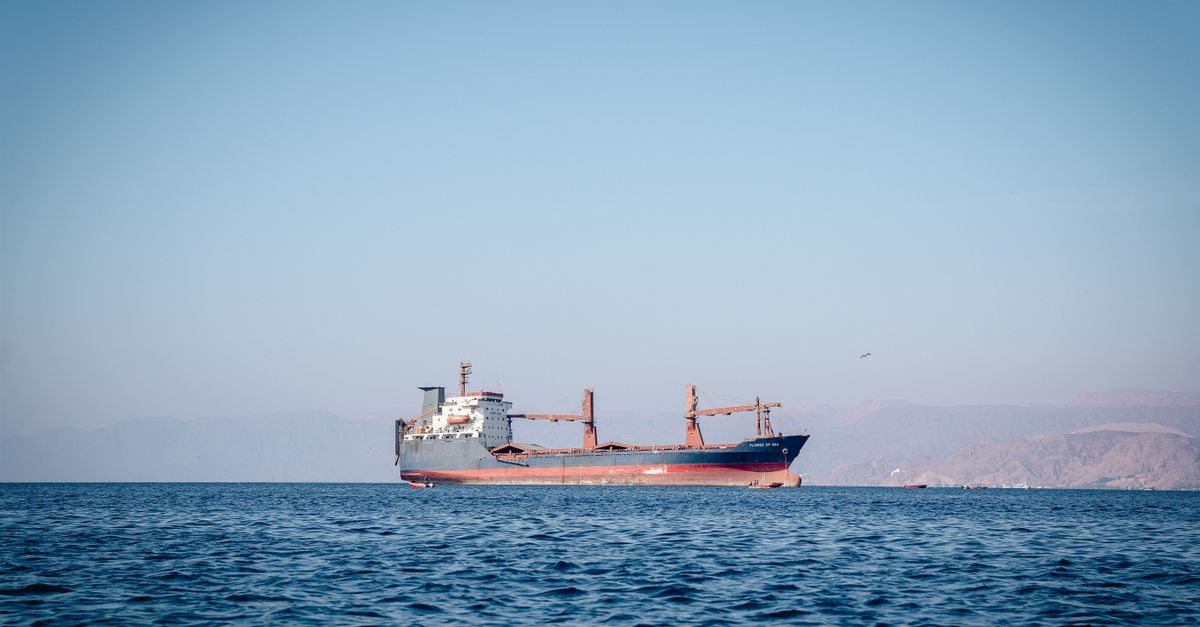
Oil market uncertainty intensifies as attempts to ease congestion in the Strait of Hormuz prove inadequate
A deepening choke point along one of the globe’s most vital maritime corridors has left energy markets increasingly unsettled.
The global energy landscape is facing escalating strain as ongoing congestion in the Strait of Hormuz continues to hamper oil shipment routes, and although the administration of Donald Trump has rolled out a new initiative aimed at facilitating vessel passage through the tight maritime channel, early signals from financial markets indicate little faith in its potential impact, with recent events instead amplifying worries that supply shortages could endure and extend the current turmoil in oil and fuel pricing.
The initiative known as “Project Freedom” is designed to facilitate movement through the strait by coordinating military and logistical assets, and U.S. officials have pointed to early wins such as the secure transit of a few vessels, yet these initial operations have scarcely altered overall perceptions, as traders and analysts doubt that the program, as currently structured, can remedy a disruption of this magnitude.
A narrow scope prompts concerns
One key source of uncertainty stems from how the operation is structured. Although it deploys considerable personnel and machinery, the initiative ultimately does not extend to offering direct naval escorts for commercial vessels, a distinction that is crucial. In the absence of assured protection, shipping firms must continue to assess the dangers of sailing through an area that has recently experienced attacks, sea mines, and increased military activity.
For many operators, lacking a comprehensive escort system still leaves substantial risk, with insurance premiums staying high and the threat of damage or loss persisting. Consequently, tanker owners may be reluctant to route their vessels through the strait, even when only minimal guidance is offered.
Iran’s resistance adds to the challenge, as it has denounced the initiative as inconsistent with the delicate ceasefire still holding. These objections deepen the uncertainty and suggest that tensions could again intensify. Reports of fresh clashes in the region have already emerged, highlighting how precarious the situation remains.
Market indicators reveal significant apprehension
Financial markets have responded swiftly to these developments, offering a clear indication of prevailing sentiment. Rather than declining in response to the new initiative, oil prices have continued to climb. Benchmarks such as West Texas Intermediate and Brent crude have surged past key thresholds, reflecting expectations that supply constraints will remain in place.
The upward movement in crude prices has been mirrored in refined products, particularly gasoline. Futures contracts for fuel have risen sharply, signaling that consumers are likely to face higher costs in the near term. In the United States, retail gasoline prices have already reached levels not seen in years, and further increases appear likely if the disruption continues.
Analysts note that markets are forward-looking, meaning that current price levels reflect expectations about future supply. The lack of confidence in Project Freedom suggests that traders do not anticipate a rapid resolution. Instead, the prevailing view is that restoring normal flows through the strait will require more comprehensive measures.
Renewed violence complicates recovery
Efforts to stabilize the situation have been further undermined by a series of incidents in the region. Reports of clashes between U.S. and Iranian forces, along with attacks on commercial vessels, have reinforced perceptions of risk. In one case, an explosion affected a ship linked to South Korea, highlighting the vulnerability of maritime traffic.
Additional concerns arose following an attack on infrastructure in the United Arab Emirates, where a significant oil facility was damaged. The site plays a key role in transporting crude through alternative routes that bypass the strait, meaning its disruption adds another layer of complexity to an already strained system.
This reinforces the perception that the region continues to face significant volatility, making it challenging for any one effort to rebuild trust. For shipping companies and energy firms, their assessment involves not only short-term security but also how reliably conditions are expected to hold over time.
Supply bottlenecks and global impact
At the center of the crisis lies a vast stockpile of energy resources that cannot move into international markets, with reports indicating that millions of barrels of crude oil and refined fuels remain stuck on tankers idling in the Gulf; this mounting congestion accounts for a substantial share of the world’s accessible supply, further heightening the disparity between output and demand.
The process of clearing this congestion is expected to be slow, even under optimal conditions. Traditional shipping routes have been disrupted, and alternative pathways are limited. Analysts warn that it could take months to fully restore normal operations, particularly if security concerns persist.
The scale of the disruption extends beyond the immediate backlog. Broader estimates indicate that hundreds of millions of barrels have effectively been sidelined due to the conflict, a figure that continues to grow.
Rising costs for consumers
For households and businesses, the most visible consequence is an increase in fuel prices. In the United States, average gasoline costs have surged, approaching levels that could place additional strain on budgets. Industry experts suggest that prices could climb even higher if the strait remains restricted for an extended period.
The likelihood of gasoline hitting $5 per gallon has emerged as a central issue in debates about the crisis’s economic consequences, as such prices would send shockwaves through the broader economy, affecting transportation expenses, inflation, and overall consumer behavior.
Government officials have sought to reassure the public, emphasizing that efforts are underway to stabilize the situation. They point to the potential release of stranded النفط supplies and commitments from producing nations to increase output.
The constraints confronting alternative approaches
While some countries and organizations have pledged to boost production, these increases are relatively modest compared to the حجم of the shortfall. Even if additional barrels are brought online, they cannot easily reach markets without secure transit routes. This highlights a fundamental challenge: supply is not just about production but also about distribution.
Although the oil currently confined in the area accounts for only a small share of the wider shortfall, releasing it would ease pressure without fully compensating for the losses driven by the ongoing conflict, leaving markets concentrating on the broader landscape, which remains shaped by persistent uncertainty.
A fragile path forward
The situation underscores how exposed global energy networks remain to geopolitical upheavals, as a lone strategic chokepoint can trigger widespread repercussions that ripple through prices, supply chains, and economic stability across the world.
For now, the outlook remains uncertain. While some progress has been made, the gap between current conditions and a full recovery is significant. Until that gap is bridged, markets are likely to remain volatile, and consumers may continue to feel the effects in their daily lives.
The response of governments, industries, and international organizations will prove crucial, as resilience must be strengthened amid continuing disruptions. Whether pursued through reinforced security protocols, sustained diplomatic efforts, or comprehensive adjustments to energy infrastructures, the overarching task remains the development of systems capable of withstanding persistent instability.